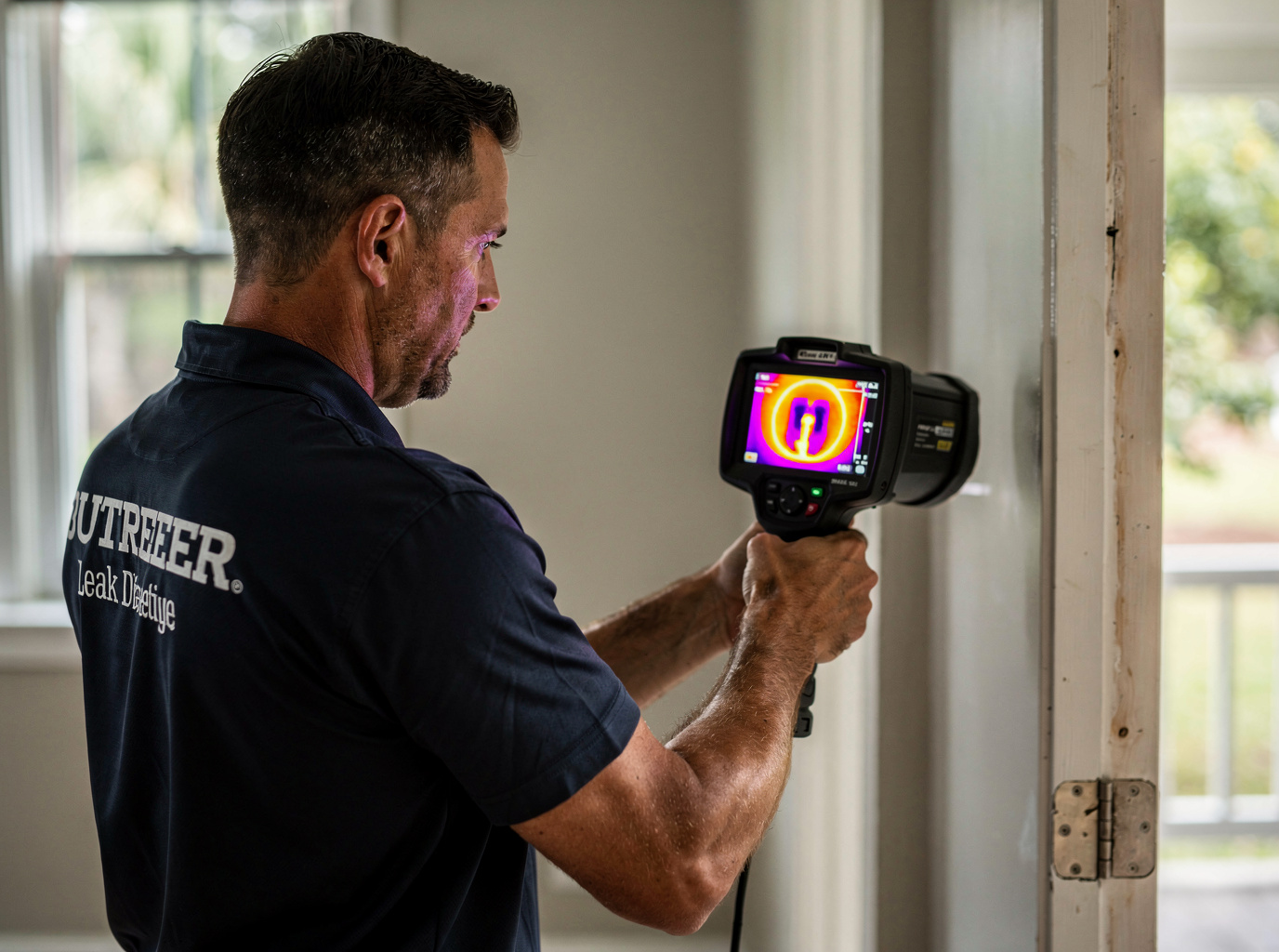
Carrying out thermal imaging leak detection across Winter Garden means balancing the quirks of vintage structures near the Winter Garden Heritage Museum on Plant Street with newer slab-on-grade builds expanding along the FL-429 corridor. In Orange County's hot, humid summers, high air-conditioning loads create stark temperature deltas across drywall and subfloors, allowing infrared cameras to clearly map cooling pipe leaks against warm, humid cavities before frequent afternoon thunderstorms mask rising moisture levels. Historic properties around the Central Florida Railroad Museum often feature patched plumbing runs inside wood-framed walls that conceal hidden seepages, while newer construction closer to FL-50 frequently suffers from concealed pressurized line leaks underneath monolithic concrete slabs. By pinpointing precise temperature anomalies without tearing into finished trim or historic plaster, thermal scans isolate subterranean supply leaks and ceiling water tracking before moisture triggers mold growth in our stifling Central Florida humidity.
Thermal Imaging Leak Detection in Winter Garden — What We Handle
- ✓Differentiating between saturated structural wood from heavy summer downpours and genuine plumbing pressurized line leaks in historic downtown framing.
- ✓Capitalizing on extreme thermal gradients between interior chilled air and sub-slab water lines warmed by Orange County ground temperatures.
- ✓Pinpointing hidden leaks without destructive demolition in historic Plant Street commercial properties and newer residential subdivisions off FL-408.
Infrared thermography changes how water leak detection is handled across Leon County by visualizing surface temperature anomalies created by active leaks. In our humid subtropical climate, evaporative cooling leaves a distinct, cooler thermal signature on porous construction materials like drywall, baseboards, and ceiling tiles, while hot water line ruptures present as intense, radiating thermal blooms. In mature residential pockets like Midtown and Killearn Estates, where many homes feature copper plumbing run overhead in unconditioned attics or encased directly beneath concrete pads, thermal cameras allow us to trace piping routes and detect moisture movement behind building materials long before soft spots, peeling paint, or mold blooms manifest.
The physical science behind thermal imaging leak detection relies heavily on indoor ambient control and thermal delta. A high-resolution radiometer does not see through solid walls; rather, it measures subtle surface temperature variances caused by conduction and evaporative cooling. In Tallahassee's sweltering summers, high indoor humidity levels can equalize building material temperatures, making passive thermal scans difficult to read. To combat this, we run diagnostic stress procedures—such as artificially adjusting interior cooling, drawing targeted hot or cold water through specific fixtures, or utilizing supplemental moisture meters to verify thermal patterns against true moisture content before any destructive cuts are recommended.
Thermal Imaging Leak Detection Services We Offer in Winter Garden
✓Under-Slab Thermal Diagnostics
Locate hot-water plumbing failures and radiant heat anomalies under solid foundations without invasive concrete chipping.
✓Drywall and Ceiling Leak Mapping
Scan interior vertical partitions and finished ceilings to trace hidden overhead pipe splits and joint failures down to the source.
✓Moisture Intrusion Assessment
Differentiate between active plumbing supply pipe failures and external rainwater intrusion around building envelopes and window assemblies.
✓Radiant and Hydronic Heating Tracing
Map buried heating loops and embedded supply conduits to find pressure-loss leaks without breaking floor finishes.
✓Post-Remediation Dry-Out Audits
Conduct comprehensive infrared scans following pipe repairs to ensure wall cavities and subfloors have completely dried out.
How It Works in Winter Garden
- 1
Ambient Baseline Setup
We review indoor environmental conditions, closing exterior windows and doors to stabilize room temperatures and optimize thermal contrast across walls, floors, and ceilings.
- 2
Comprehensive Infrared Scanning
Using high-resolution radiometric thermal cameras, we sweep target rooms, plumbing corridors, and concrete slabs to document temperature differentials and locate anomalous thermal patterns.
- 3
Hydrostatic Stress Testing
When leaks are subtle, we isolate plumbing zones and run warm or chilled water through suspected lines to provoke an active, visible thermal blooming pattern.
- 4
Moisture Meter Corroboration
Every identified thermal anomaly is independently tested with pinless or pin-type moisture meters to confirm actual moisture presence and rule out insulation voids or airflow shadows.
- 5
Targeted Mapping and Reporting
We physically mark the precise leak location on the surface and provide clear photographic documentation to guide targeted, non-destructive plumbing repairs.
Serving All of Winter Garden
We regularly handle thermal imaging leak detection jobs near:
- 📍Plant Street
- 📍Winter Garden Heritage Museum
- 📍Central Florida Railroad Museum
- 📍Winter Garden Farmers Market
- 📍Winter Garden Village
Thermal Imaging Leak Detection Pricing in Winter Garden
Thermal imaging leak detection pricing in Leon County depends on property square footage, accessibility of the suspected run, and whether slab conditions require active thermal manipulation.
Want the full picture of this service? See our Thermal Imaging Leak Detection page, or everything we do in Winter Garden, FL.