2026-10-11 ·
DIY Leak Check: Simple Steps to Identify Water Leaks Before They Grow
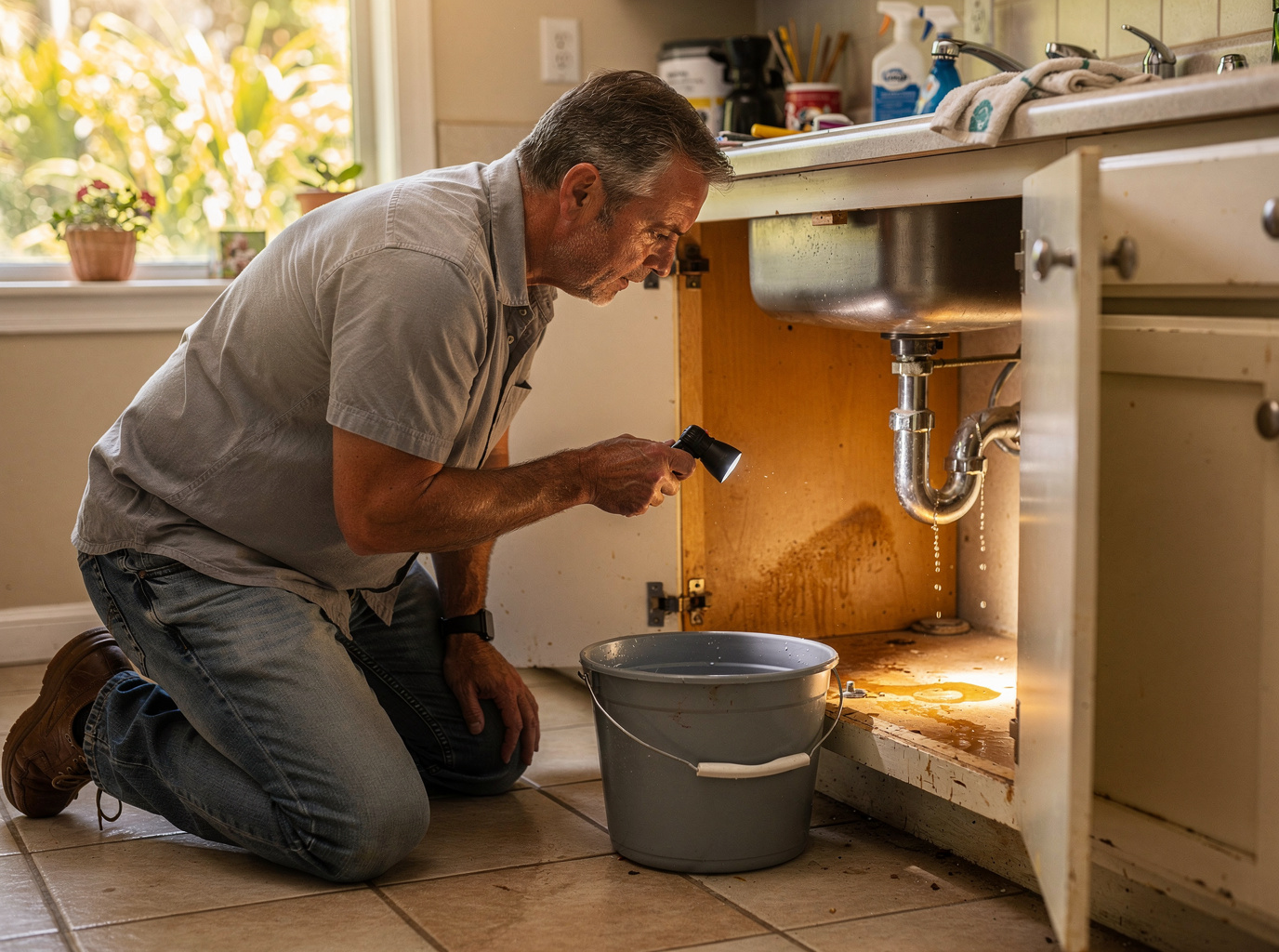
A thorough DIY leak check takes roughly 15 to 30 minutes and can save you anywhere from $500 to over $4,000 in structural damage, high utility bills, and extensive mold remediation. By methodically inspecting your water meter, isolating indoor fixtures, and surveying key vulnerability zones across your property, you can catch pinhole supply failures and hidden pipe breaks long before they warp your subfloors or compromise your foundation. In Leon County, staying ahead of hidden moisture is essential to preserving your property's value and structural integrity.
The 10-Minute Water Meter Test
The simplest and most accurate way to verify an active leak is to let your utility water meter do the diagnostic work for you. Start by turning off every water-consuming appliance inside and outside your house—ensure washing machines, dishwashers, ice makers, and automated irrigation zones are completely silent. Then, locate your water meter box, which is typically installed in an in-ground utility pit near the street curb or front boundary line.
Open the meter cover and look at the dial face. Most modern meters feature a low-flow indicator—often a small red, blue, or silver triangular star or gear—that spins when even a fraction of a gallon passes through the line. If your meter has a digital display, note the exact reading down to the final decimal digit. Leave all taps completely shut for 20 to 30 minutes, then check the dial again. If the small indicator continues to turn, or if the digital register has increased by even 0.1 gallons, pressurized water is escaping somewhere downstream on your property.
Isolating the Leak: Indoor Fixtures vs. Underground Lines
Once your meter confirms unaccounted flow, your next step is determining whether the failure sits inside your living space or out in the buried supply line. You can isolate the source quickly using your home's main shut-off valve, generally mounted where the primary copper or CPVC riser enters your house near the garage or exterior spigot.
- Shut off the main house valve: Turn the valve completely clockwise (or perpendicular to the pipe for lever-style ball valves).
- Re-check the utility meter: If the meter's low-flow dial continues spinning while the main indoor valve is closed, the break is located underground between the street meter and your foundation.
- If the meter stops completely: The leak is inside your home. Reopen the main valve and proceed fixture by fixture to pinpoint the culprit using basic diagnostic tools.
If you find that the underground line is compromised, scheduling professional residential leak detection ensures technicians pinpoint the exact breach beneath the dirt or driveway without unnecessary trenching.
Inspecting Common Interior Culprits
Indoor leaks often hide in plain sight, masquerading as routine fixture quirks until moisture compromises drywall and subflooring. The most common household offender is the gravity-flush toilet, which can waste between 30 and 200 gallons of treated water daily through an imperfect tank flapper.
To test your toilets, drop 4 to 6 drops of dark food coloring into the upper tank water and wait 15 minutes without flushing. If colored water seeps into the bowl, the rubber flapper or flush valve seal has deteriorated and requires replacement. Beyond the commode, run a dry paper towel along the flexible braided supply hoses, shut-off angle stops, and P-traps beneath your bathroom vanities and kitchen sink. Inspect appliance supply lines behind your refrigerator and washing machine; braided stainless steel lines generally have a reliable lifespan of 5 to 8 years, after which crimped rubber cores can develop micro-fractures under continuous household pressure.
Spotting Subsurface and Foundation Leaks
Not every leak reveals itself through dripping sounds or pooling cabinet water. In neighborhoods built on concrete slab foundations, such as Southwood or sections of Killearn Estates, plumbing supply pipes frequently run encased within or directly beneath poured concrete. In our humid subtropical climate with hot summers and mild winters, subtle foundation shifts can stress copper joints buried in the ground.
Be alert to the classic warning signs of deep subsurface failures:
- Unexplained warm spots: Walking barefoot across tile or laminate and feeling an isolated patch of heat often indicates a hot-water supply line rupture beneath the slab.
- Localized floor swelling: Buckling hardwood, warped vinyl planks, or damp carpet tacks with no overhead water source.
- Audible water movement: A steady hissing or humming sound in the walls late at night when the entire house is quiet.
- Efflorescence and musty odors: White, powdery mineral salts pushing through concrete or persistent mildew smells that return despite deep cleaning.
When structural signs like these appear, professional slab leak detection is critical to map the line using acoustic listening discs and electronic amplification before extensive flooring is removed.
When to Bring in Professional Detection
A weekend DIY check gives you the baseline facts, but pinpointing subterranean breaks, concealed wall voids, or complex perimeter failures requires specialized diagnostic gear. If your utility meter indicates continuous flow that you cannot track down under sinks or at your water heater, or if you suspect cracked foundation piping, stopping early preserves your home's framing and foundation.
Homeowners weighing the investment of non-invasive diagnostics can review understanding water leak detection costs in Tallahassee to see how acoustic locating and pipe profiling prevent destructive guesswork. The team at Leak Detection Pros is available Monday through Friday from 8:00 am to 6:00 pm, and Saturdays from 9:00 am to 2:00 pm, helping property owners protect their investments throughout the region.